One Family
The story begins in the Swiss Alps. Johann Wilhelm was born in Wildhaus, a small village in the Toggenburg valley of St. Gallen canton — the same town where Protestant Reformer Huldrych Zwingli was born just months later.
This is the brick wall — the oldest ancestor we can document. Church records in Wildhaus don't survive before 1634, so Johann's parents remain unknown. He is the deepest root of the family tree, planted in Alpine soil over five centuries ago.
Klaus emigrated from Wildhaus to Haslen in Glarus canton around 1544. There he married Anna Zwingli, niece of the man who launched the Swiss Reformation. Through this marriage, the family has a direct connection to one of the most consequential figures of the 16th century.
This generation adopted the surname "Wild" — likely derived from their origin in Wildhaus.
Elisabetha Wild, born in Stuttgart, married Jacob Zöller of Württemberg. The family had crossed from Switzerland into Germany. With this marriage the surname shifted from Wild to Zöller — the first of five transformations that would eventually produce "Sailors."
Born in Fickenhütten in Westphalia (northern Prussia), Jacobus lived through the Thirty Years' War (1618–1648) — the deadliest European conflict before the World Wars. He died in Neftenbach near Zürich, suggesting a return to Switzerland, perhaps fleeing the devastation.
The surname was recorded as both Zöller and Seiller in church documents of this era.
Thomas spent his entire short life in Lockweiler in the Saarland. He died at only 40. The umlaut had already begun to drop from the family name — Zöller becoming Zoeller in the local records. Two more transformations to go.
Joannes Adamus was the last generation born in Europe. His son Abraham would be the one to cross the Atlantic. The family had spent two centuries moving through German-speaking lands — Switzerland, Württemberg, Prussia, Saarland, and back to Baden-Württemberg.
The name was now recorded as "Zoellers" in church documents — edging toward its English form.
Abraham was born in Lucerne, Switzerland and arrived in Philadelphia around 1731–1736 as part of the great wave of German-Swiss immigration to Pennsylvania. He settled along the Susquehanna River near the Pennsylvania-Maryland border.
In the New World, the German "Zoellers" was Anglicized to Saylors. English-speaking clerks and neighbors reshaped the name to something they could pronounce. Two hundred years of European wandering ended; the American chapter began.
John fought in two of the American Revolution's pivotal Southern battles: Ramsour's Mill (June 1780) and King's Mountain (October 1780) — the engagement Thomas Jefferson called "the turn of the tide of success" in the war.
After independence, John moved his family south into the Carolinas and eventually west to Rush County, Indiana. He died at 77 — a citizen of the nation he helped create. By his generation the surname had permanently settled into its final form: Sailors.
Thomas was born in South Carolina's Abbeville District — deep in the Appalachian foothills. He served as Justice of the Peace in Rush County, Indiana, continuing the family's westward push from Maryland through the Carolinas and into the frontier territories.
Named for the nation's founder, George Washington Sailors was born on the Indiana frontier. He died young at 40, leaving his widow Asenath to raise their children alone. She would live to 86 and eventually move the family to Nebraska — setting the stage for the most consequential chapter in the family story.
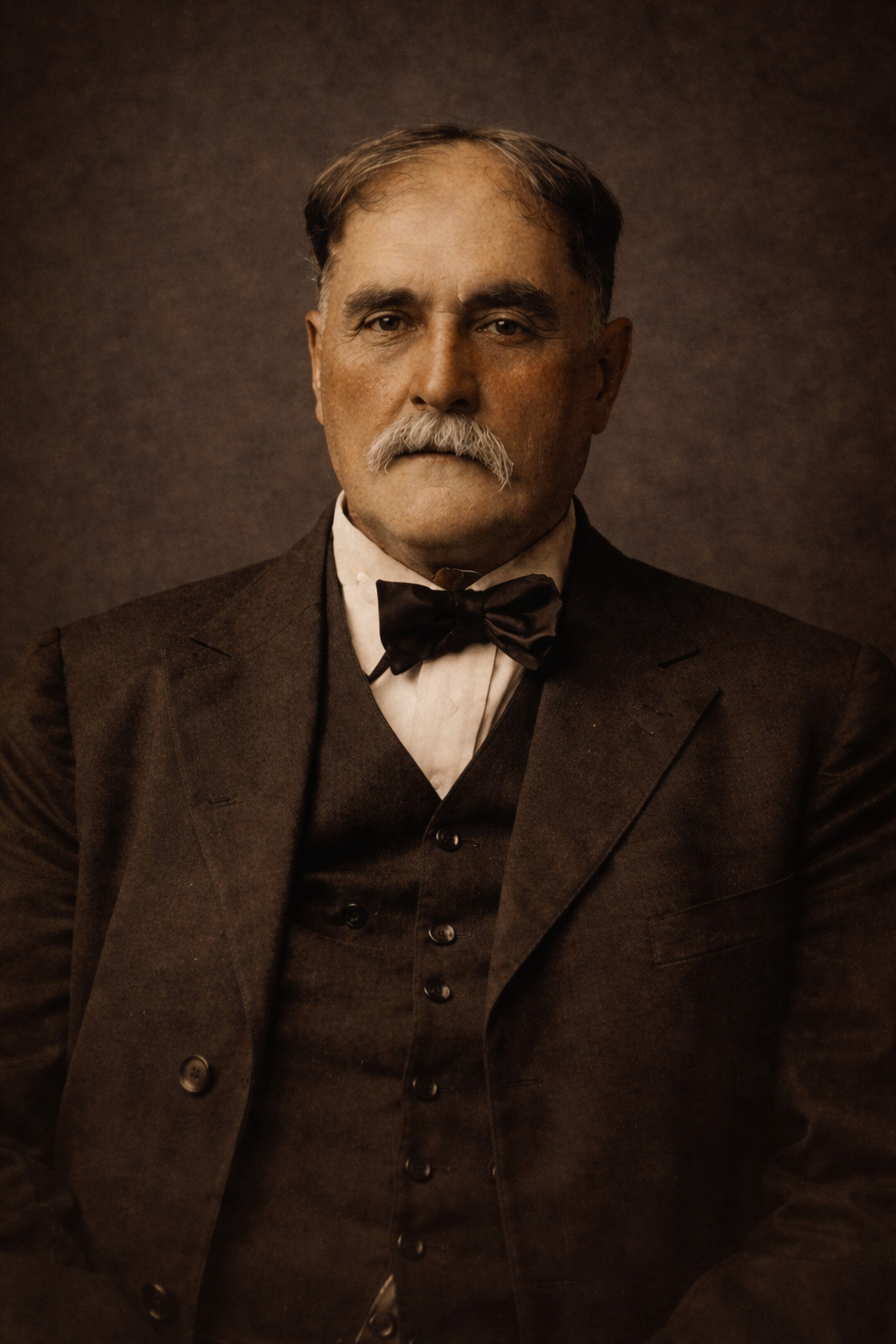
Lot George followed his widowed grandmother Asenath to Richardson County, Nebraska. There he married Mary Ann Peters — granddaughter of Antoine Barada Jr. and great-granddaughter of Tae-Gleha "Laughing Buffalo," a full-blood Omaha woman.
The Omaha Line Enters
Through Mary Ann, the European Sailors bloodline merged with the Omaha Nation. Tae-Gleha (~1772) had married Michel Barada, a French fur trader, around 1795 at the Omaha village near Bellevue. Their son Antoine Barada Jr. became "Nebraska's Paul Bunyan" — a folk hero of legendary strength. The two rivers — European and Indigenous — became one family.
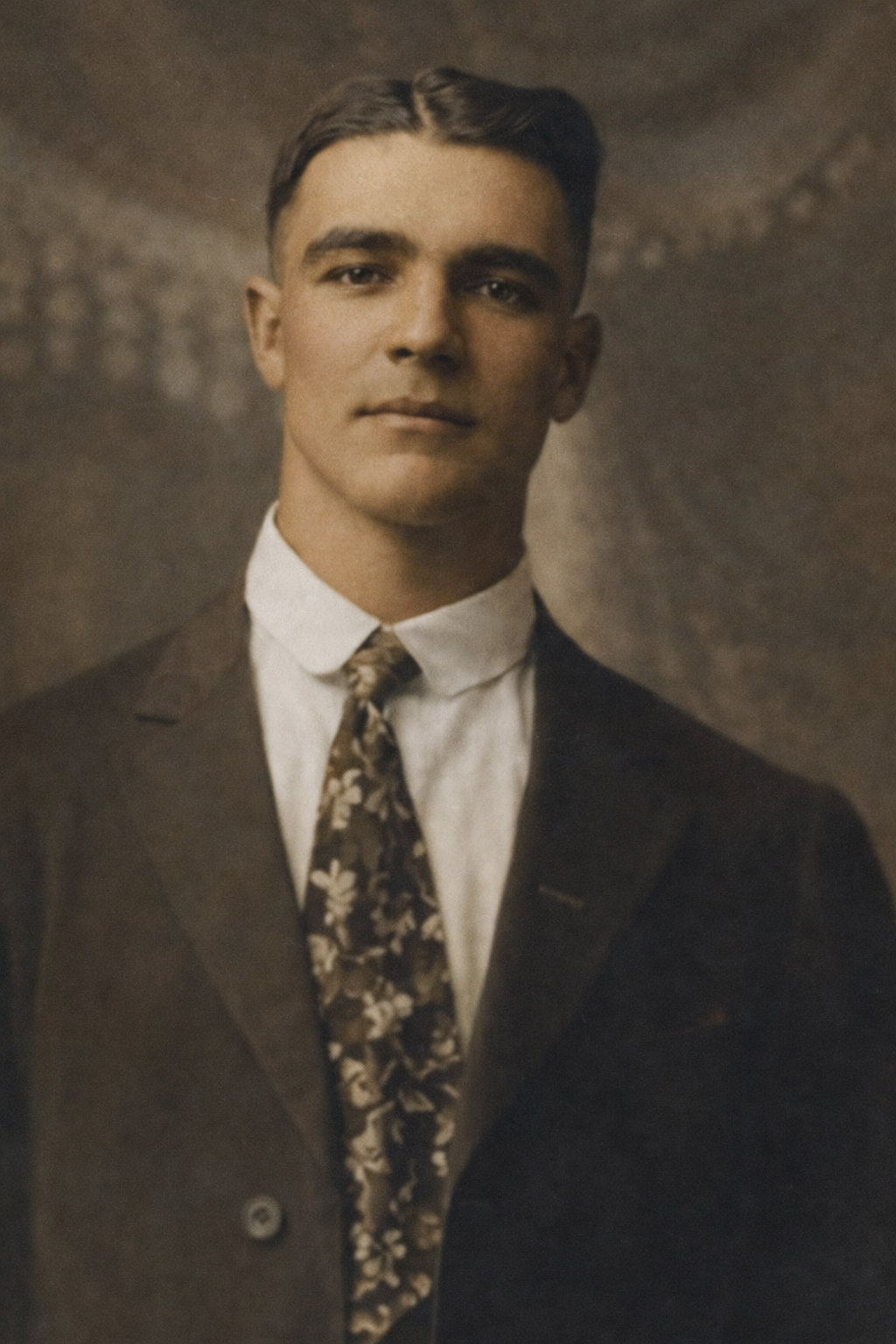
Garl was the 11th of Lot and Mary Ann's 15 children, born in the tiny settlement of Barada in Richardson County. He married Elsie Keyser — the woman who as a child encountered the Dalton Gang on her family's homestead in Oklahoma Territory. Together they had 15 children of their own, farming in Thurston County until his death at 71.
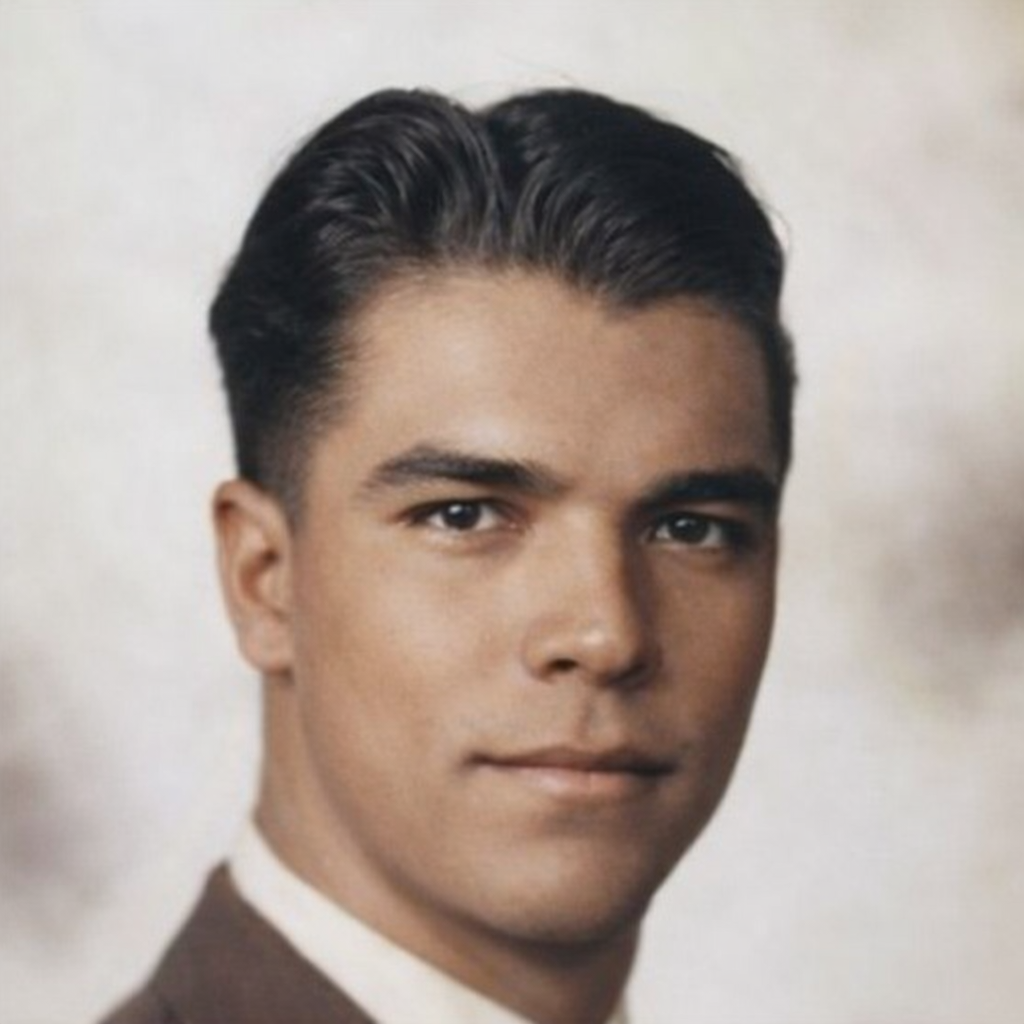
Garlie was a WWII Technical Sergeant with the 57th Station Hospital in North Africa (1943–45). After the war he became a school superintendent in Dakota City, coached football and basketball, and was active in the Masons and American Legion. He carried 1/32 Omaha heritage from his great-grandmother Mary Ann Peters.
He died tragically young at 48 in a lake accident near the South Dakota-Minnesota border. His brother Fulton wrote a poem in his memory that the family keeps to this day.
Rod was born in Wayne, Nebraska — the same corner of the state his family had called home for three generations. He was 22 when he lost his father Garlie. Rod is the keeper of the family tree, the one who built the Ancestry research that made this entire project possible.
From Johann Wilhelm in a Swiss Alpine village to Rod in a Nebraska town — 540 years, 17 generations, two continents, five names, and one unbroken line.